FINAL EXAM

Open the link below, and select one of the three exam options.  (The readings for Option A are located directly below the exam study guide.)

STUDY GUIDE, Exam Options.pdf STUDY GUIDE, Exam Options.pdf
Size : 281.116 Kb
Type : pdf
READINGS, Exam Option A.pdf READINGS, Exam Option A.pdf
Size : 191.79 Kb
Type : pdf

UNIT 8: BITE-SIZED PHILOSOPHY

Goal: Analyze Plato's Allegory of the Cave by breaking down and discussing the ancient Greek philosopher's ideas about objects and forms.   Then examine the works of the ancient Taoist master Lao-tzu, asking, "What does Lao-tzu say to human beings who want to live a good life?"  Ultimately, place the works of Plato and Lao-tzu side by side for comparison: In what ways do their ideas overlap, and in what ways do they disagree?  [A1: As an enrichment, juxtapose both Plato and Lao-tzu with the contemporary poet/philosopher muMs (Craig Grant).  How would the ancients evaluate muMs' ideas as expressed in his spoken word piece "The Truth, parts I and II"?]

MAY 2, Wu Wei (B. Hoff excerpts).pdf MAY 2, Wu Wei (B. Hoff excerpts).pdf
Size : 518.122 Kb
Type : pdf
APRIL 23, Taoism and the Tao teh Ching.pdf APRIL 23, Taoism and the Tao teh Ching.pdf
Size : 81.762 Kb
Type : pdf
APRIL 15, Guided critical thinking (muMs).pdf APRIL 15, Guided critical thinking (muMs).pdf
Size : 268.992 Kb
Type : pdf
APRIL 15, muMs (The Truth, parts I and II).pdf APRIL 15, muMs (The Truth, parts I and II).pdf
Size : 268.198 Kb
Type : pdf

UNIT 7: ECONOMIC SYSTSMS

Goal: Compare and contrast the economic systems of capitalism, communism, and socialism.  At the most basic level, you should be able to identify each system from a set of descriptors.  To demonstrate a greater depth of understanding, you should be able to evaluate capitalist, socialist, and communist grading systems.

03.25.19, CAPITALISM.pdf 03.25.19, CAPITALISM.pdf
Size : 220.406 Kb
Type : pdf
03.27.19, SOCIALISM.pdf 03.27.19, SOCIALISM.pdf
Size : 164.563 Kb
Type : pdf
03.29.19, COMMUNISM.pdf 03.29.19, COMMUNISM.pdf
Size : 131.785 Kb
Type : pdf
04.03.19, MARX's COMMUNIST MANIFESTO.pdf 04.03.19, MARX's COMMUNIST MANIFESTO.pdf
Size : 82.324 Kb
Type : pdf
04.04.19, REVIEW OF ECONOMIC SYSTEMS.pdf 04.04.19, REVIEW OF ECONOMIC SYSTEMS.pdf
Size : 97.518 Kb
Type : pdf

UNIT 6: THE RWANDAN GENOCIDE

Goal: Analyze (break down) the short-term and long-term causes of the Rwandan genocide.  Trace the history of Hutu-Tutsi relations dating back to the 1800s and up through the early 1990s.  What historical developments paved the way for a major conflict between the two groups, and what was the spark that ignited the genocide in April 1994?  Ultimately, piece together the 10 stages of the genocide, using the "10 Stages of Genocide" authored by the international organization Genocide Watch, and establish culpability -- who/what deserves blame for the killing?

02.26.19, The 10 Stages of Genocide.pdf 02.26.19, The 10 Stages of Genocide.pdf
Size : 97.955 Kb
Type : pdf

UNIT 5: CONFLICT IN THE HOLY LAND (Israel vs. Palestine)

Goal: Analyze (break down) the conflict in the Holy Land between the Jewish state of Israel and the mostly Muslim state of Palestine.  Trace the history of the conflict to uncover the long-terms roots of the tension AND the more immediate problems that have arisen between the Muslim and Jewish populations in the region.  Ultimately, the goal is to propose and justify geo-political solutions that might bring stability to the region.

FEB 21-22, Unit Assessment Study Guide.pdf FEB 21-22, Unit Assessment Study Guide.pdf
Size : 370.104 Kb
Type : pdf
FEB 19-20, QUESTIONS AND SOURCES (for FEB 19-20 conflict analysis document below)

1. ABRAHAMIC RELIGIONS: What are the 3 Abrahamic faiths, and why are they called Abrahamic?

2. NATIONALISM: What does it mean if a people have a lot of nationalism?

3. ZIONISM: What city does "Zion" refer to, and what is the central belief of modern Zionism?

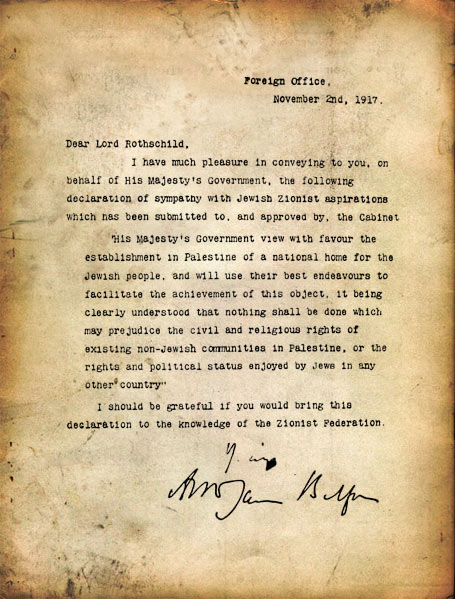
4. THE BALFOUR DECLARATION: In 1917 a representative of the British (English) government wrote a letter to a well-known Jewish citizen in England.  In the letter Lord Balfour declared England's support for the Jewish Zionist goals.  What statement in the letter proves this support?

5. THE UN PARTITION PLAN OF 1947: What did the United Nations propose to do about the conflict over land in Palestine?  Who accepted the proposal?  Who did not -- and why?

6. THE ARAB-ISRAELI WAR OF 1948: Why did the Palestinian Arabs and neighboring Arab states go to war against the Israelis?  What countries invaded Palestine to fight against the Jews?  What side won the war?  How many Palestinians were driven out of their homeland?

7. THE PLO: What does "PLO" stand for?  What were the founding goals of the organization?  

8. THE SIX-DAY WAR OF 1967: Watch the video and then summarize the Six-Day War -- Who were the players; what was the outcome of the war; and what did the result mean for Palestine?

9. THE OSLO ACCORDS OF 1993: What were the Oslo agreements between Israel and PLO supposed to achieve?  What went wrong -- why were the agreements never realized?

10. THE INTIFADAS: Identify the meaning of the term "intifada."  Then explain why the Palestinians have waged two intifadas against Israel.  Finally, do you think the intifadas have helped or hurt the Israeli-Palestinian peace process?

11. HAMAS AND FATAH: Hamas and Fatah are the two main wings of the PLO.  What part of Palestine does Hamas lead?  What part of Palestine does Fatah lead?  Finally, how are the goals and strategies of the two parties different?

12. ISRAELI SETTLEMENTS IN THE WEST BANK: Examine the charts/maps on the site.  What is happening over time to the number of Jewish/Israeli settlements in the Palestinian territory of the West Bank?  How do you think this is affecting Israeli-Palestinian relations?

TRT WORLD video: The Intifadas
TRT WORLD video: The Oslo Accords of 1993
TRT WORLD video: The Six-Day War of 1967
FEB 12-13, Map of Israel and Palestine.pdf FEB 12-13, Map of Israel and Palestine.pdf
Size : 284.707 Kb
Type : pdf

UNIT 4: POLITICAL IDEOLOGIES & TYPES OF GOVERNMENT

Goal: Understand the difference between AUTHORITARIANISM and CONSTITUTIONALISM as political ideologies, then distinguish different authoritarian and constitutional systems of government.  Ultimately, student teams will need to justify which type of governing system would most effectively establish and/or maintain order.  

Additionally, we will read an excerpt from N. Machiavelli's The Prince and examine whether the author believed it better for a government to be feared or loved. 

SEMESTER EXAM!!!

SEMESTER EXAM STUDY GUIDE.pdf SEMESTER EXAM STUDY GUIDE.pdf
Size : 933.562 Kb
Type : pdf

UNIT 3: INFRASTRUCTURE & ECONOMIC DEVELOPMENT

Goal: Understand that economies may be evaluated and classified as pre-developing, developing, developed, and post-developed.  The level of economic development is directly related to the economy's capacity to produce goods and services industrially.  A pre-developing economy is one that has not begun to industrialize in any significant way.  A developing economy has started to industrialize, but the benefits of that industrialization are largely limited to particular sectors of the state (usually urban areas).  A developed economy is an industrial economy; its mass-production and mass-distribution of goods and services makes the state competitive on a global scale.  A post-developed economy has moved beyond production and distribution and into research and more advanced development (the USA is an example of a post-developed state).  

In this unit students will learn to evaluate economies by zooming in on particular systems of infrastructure (systems of health, communication, transportation, etc.).  They will explore the connections between resource holdings, infrastructure development, and economic might.

03, Study Guide (Infr. and Dev. test).pdf 03, Study Guide (Infr. and Dev. test).pdf
Size : 224.439 Kb
Type : pdf

UNIT 2: GEOGRAPHIC INFORMATION SYSTEMS (G.I.S.)

Goal: Understand that geographers think about the world spatially, and they examine all the ways that societies interact with (and change) their physical environments.  Additionally, geographers use Geographic Information Systems (G.I.S.) to help solve geographic problems. 

For example, imagine you are a new restaurant owner, and you are facing this problem: Where in Nashville should I build my new pizza restaurant?  With G.I.S. the restaurant owners can layer different pieces of data about a geographic area (ex: where is there available space to build a new restaurant; where are the other pizza joints; where is the crime; where are the residential areas).  Seeing all of the data on one map will let you determine which sites in the city have the highest asset value.  In other words, you can use a G.I.S. to see which sites would be most likely to produce a successful pizza business.

You will be successful at the end of this unit if you are able to explain how Geographic Information Systems work AND apply your knowledge of G.I.S. to solve a particular problem.

G.I.S. Unit Study Guide and Test Prep.pdf G.I.S. Unit Study Guide and Test Prep.pdf
Size : 410.516 Kb
Type : pdf

UNIT 1: MS. PIGIE

Goal: Understand what it means to analyze individuals or groups by examining their a) Morals and ethics, b) Social systems and Institutions, c) Politics and government, d) Intellect and education,     e) Geography and environmental interactions, f) Innovation and technologies, and g) Economy and development levels.

MS PIGIE.pdf MS PIGIE.pdf
Size : 148.437 Kb
Type : pdf
03, Key Concepts [SOCIETY & INSTITUTIONS].pdf 03, Key Concepts [SOCIETY & INSTITUTIONS].pdf
Size : 156.231 Kb
Type : pdf
05, Core Concepts [POLITICS & INTELLECT].pdf 05, Core Concepts [POLITICS & INTELLECT].pdf
Size : 207.163 Kb
Type : pdf
09, Core Concepts [INNOVATION & ECONOMY].pdf 09, Core Concepts [INNOVATION & ECONOMY].pdf
Size : 201.889 Kb
Type : pdf
 

Make a free website with Yola